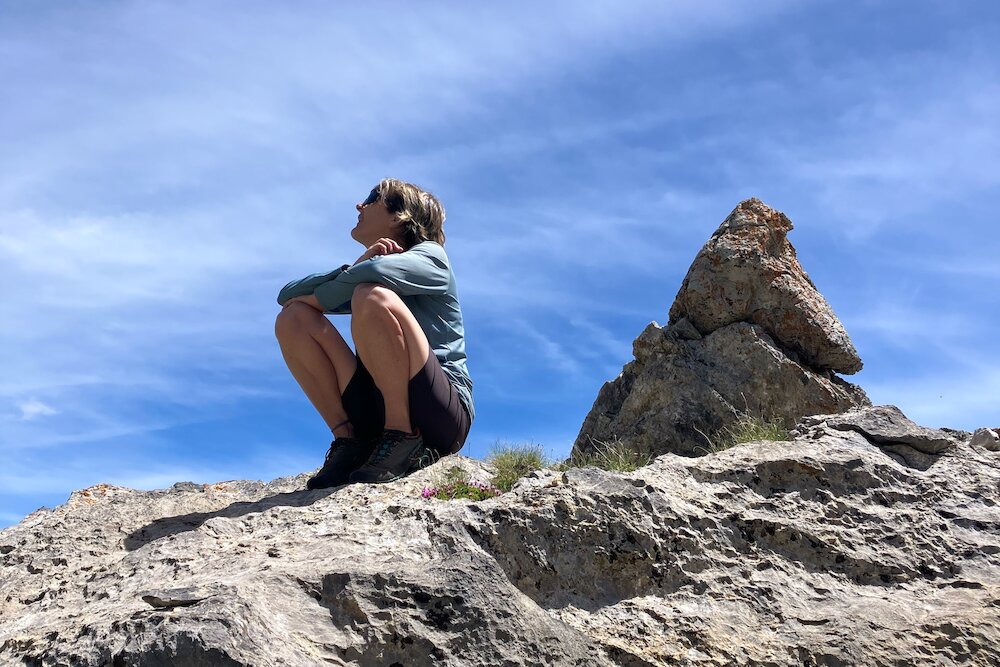
The spiritual path (whatever you choose to call it: yoga, religion, philosophy—whatever gives coherence to your being) is not the promise of a distant awakening, a peace that can only be attained after hard work and sacrifice. Nor is the spiritual path a promise of transformation into someone we are not—a better, calmer, wiser, or more at peace person.
Rather, the spiritual path invites us to discover a dimension of our being that has always been there, one that surfaces in our lives during pivotal moments (whether intense joys, accidents, or upheavals). This dimension—the Buddha-nature in Buddhism, sat chit ananda in Shaivism, the divine or consciousness in other traditions—awaits discovery.
And therein lies the irony or paradox: to connect with our “Buddha-nature,” we must (re)learn to be—truly be. There is nothing to “do” in this vision other than to be—simply to be.
Formal meditation (on a cushion) and informal meditation (in everyday situations) are opportunities to go “on retreat,” to let ourselves simply be and to hear the profound truth that is trying to express itself beneath the demands, roles, and thought patterns.
This truth is nothing other than a space where we are finally “nobody,” where we no longer have anything to defend, manage, or control. And so we can open ourselves up to being “everything.”
To meditate is to be. To truly be—no longer trying to be this or that, like this or like that—but to let oneself be without a plan or expectation. Then an immensity of possibilities emerges on the horizon of the present moment.