I think that as a child, like many children, I felt a strong connection to my body—to its power, its agility, and its potential. I certainly had a vivid imagination, fueled in large part by reading adventure stories, but it was my body that became writing, storytelling, expression, and the means and arena for fulfilling my desires. Back then, my desires boiled down to running through the forest, jumping over fences, climbing trees, stealing cherries, and building treehouses. Back then, my body wasn’t gendered; I wasn’t yet “a girl”—I didn’t become one until late adolescence—I ran the fastest in school, regardless of whether I was in the girls’ or boys’ category, and I took nothing but physical pride in that. Later, I learned to become a “girl” and to compare myself to my peers, and that surely coincided with the beginning of a separation between body and mind that I’ve spent the rest of my life trying to mend. Because something definitely broke at some point; a sense of cohesion, coherence, and continuity vanished; a simplicity of being was buried under the grip of a “mind” deemed superior because it was educated, tamed, and civilized.
I certainly tried to live from the mind, to find in it stimulation, meaning, and enthusiasm for my life. Like many, I obeyed the need for control, which I mistook for wisdom. I studied—a great deal and for a long time—and quickly attained the status of an “intellectual,” a cultured and therefore respected person. I learned a great deal with my mind, leaving my body starved for nourishment and mistakenly believing I knew what to give it: lots of exercise, to excess. Exercise experienced as yet another means of controlling and calming—or stifling—any animal vitality, any desire for primal or even primitive connection. Lots of movement, but movement that was aesthetic, technical, calibrated, and controlled.
The irony of those years spent in my head—even when I was in my body—is that the subjects that interested me were already pointing toward the richness of a rediscovered body-mind relationship. I was working on deterritorialization, the dissolution of identity, the questioning of the “I,” what lies “in between,” transitions, space, and flight. I was working on movement—the kind that eludes us, that cannot be contained, that is fleeting and contingent. I was already working on the space of consciousness, but I believed it resided in the thinking mind and depended on logos.
My father—a philosopher, completely disconnected from his body—asked me this question time and again as yoga took up more space in my life: “But what is the role of the body in attaining consciousness?” Ultimately, this question has become central to my studies, research, and learning over the past twenty years. To be conscious not only of the body but through the body, from the body, within the body. To understand our embodiment in its multiple dimensions—the obvious ones of our physical form, our biology, our physiology—and its subtle, emotional, energetic, and even secret dimensions. Feeling my muscles and bones, but also my breath, my organs, and all the space that constitutes and extends beyond the body. Living from the field of consciousness that encompasses and dissolves the body/mind dichotomy. Becoming life, rediscovering the being that is not me, yet is also me.
All of this is just words, and I am well aware that my ability to wield language and think in abstract terms acts as a filter here as well. For how can one speak of that which is completely here and yet, at the same time, beyond? Of that which is immanent and transcendent? Artists know this: it is the elusive gesture, one we can never fully capture, for it is in a state of perpetual becoming. This is why the body is at the heart of meditation—because it feels, it lives, it breaks down the barriers of thoughts and categories of being; it simply is.
I am on this wonderful quest to fully access what is already there but can only reveal itself if thought and the faculty of judgment relax, soften their edges, and allow themselves, too, to simply be.
I am preparing to lead an immersive workshop on the body in and through meditation—I hesitated over the title, aware that this hesitation holds something precious and meaningful—I have many books and practices to draw upon; and above all, I have my own intimate experience of being, which I hope will dare to step forward as a guide and resonate far beyond words.
______________
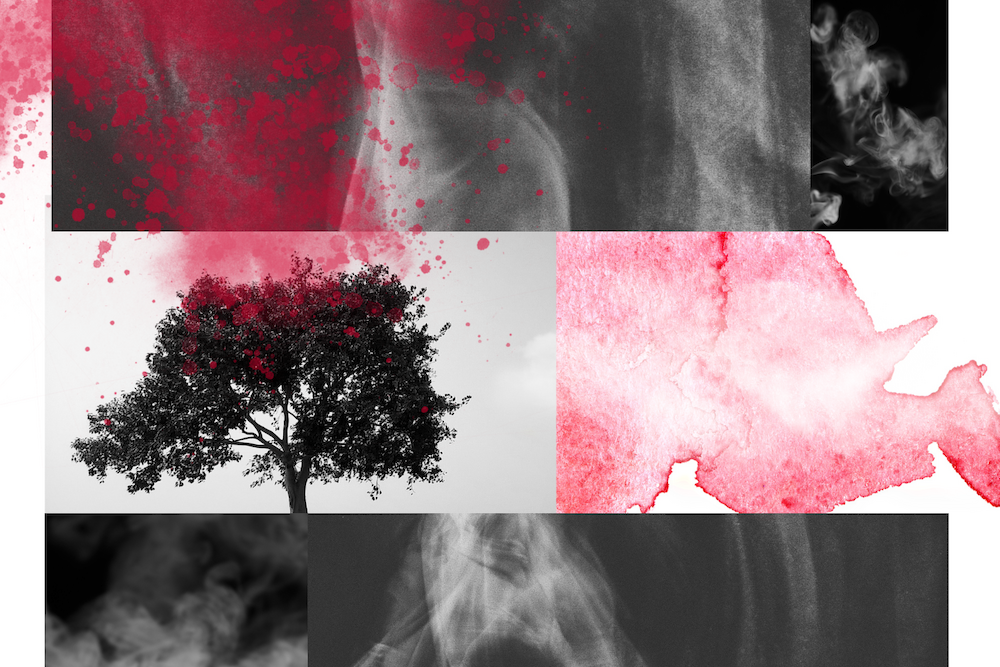
Illustration: Movement—Series: Life of the Body, Elise Maes Le Goff, December 2023